Howdy Western Cowgirl Crochet Shirt PNG: A Guide to Quality and Usability
The intersection of rustic charm and modern crafting has created a surge in demand for designs that feel both handmade and professionally polished. The Howdy Western Cowgirl Crochet Shirt PNG sits squarely at this crossroads, offering a digital asset that appeals to those who love the texture of yarn and the spirit of the American West. However, purchasing a digital design file is not as straightforward as buying a physical product. Many creators, from seasoned print-on-demand entrepreneurs to weekend hobbyists, often overlook critical technical details that can make or break their final product. Understanding what you are actually buying—and how to use it correctly—is essential for achieving professional results.
Understanding the Digital Asset
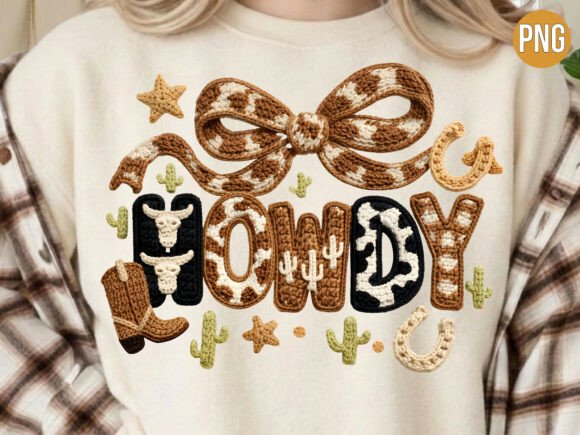
When you acquire a High-Quality Digital Design File, you are not receiving a physical shirt or a printed sticker. You are receiving a license to use a specific graphic representation. In this case, the design features a stylized crochet texture combined with western motifs, likely including text like "Howdy" and imagery associated with cowgirl culture. The primary value lies in the versatility of the file format. A PNG (Portable Network Graphics) file with a transparent background allows you to place this design over any color fabric, mug surface, or paper stock without a white box surrounding the image. This transparency is crucial for maintaining a clean, professional look in your final creations.
Many beginners mistakenly believe that any image found online can be used for commercial printing. This is a significant error. High-quality sublimation or direct-to-garment printing requires specific resolution standards. The 300 DPI (Dots Per Inch) resolution mentioned in the file information is the industry standard for crisp, clear prints. Using a lower resolution image, such as one saved for web use at 72 DPI, will result in pixelated, blurry outputs that look amateurish and unappealing to customers.
Common Pitfalls in File Handling
One of the most frequent mistakes users make occurs before they even open their design software. The product is delivered as a ZIP folder. This compression format is used to keep the file size manageable during download and to protect the integrity of the data. However, many users attempt to open the PNG directly from within the zipped folder or drag it into their design program without extracting it first. This can lead to corrupted files, slow software performance, or errors where the design fails to load correctly.
The Correct Approach: Always locate the downloaded ZIP file on your computer. Right-click the file and select "Extract All" (on Windows) or double-click it to unzip (on Mac). Save the extracted PNG file to a dedicated folder on your hard drive where you can easily access it. This simple step ensures that the file is fully intact and ready for high-speed processing by your design software.
Software Compatibility Misconceptions
Another area where confusion arises is software compatibility. While PNG is a universally supported format, not all editing tools handle transparency and layers equally well. Some basic photo viewers or simplistic online editors may flatten the image or add a white background automatically, defeating the purpose of the transparent design. Before purchasing, you must ensure that your chosen software supports PNG files with alpha channels (transparency).
Professional tools like Adobe Photoshop, Illustrator, or Procreate handle these files effortlessly. However, if you are using free or budget-friendly alternatives like Canva, GIMP, or Photopea, you need to verify that your account level or version supports uploading and manipulating transparent PNGs. For instance, some free tiers of online design platforms may restrict the ability to remove backgrounds or upload custom high-resolution assets. Checking this beforehand saves you from the frustration of discovering your tool cannot process the file after you have already made the purchase.
Maximizing Versatility in Print on Demand
The true power of the Howdy Western Cowgirl Crochet Shirt PNG lies in its adaptability. It is not limited to t-shirts. The high resolution and transparent background make it suitable for a wide array of Print on Demand (POD) products. However, applying the same design to different surfaces requires different considerations.
- Apparel: When printing on dark fabrics, ensure your printing method supports white underbases, or consider adding a white layer behind the design in your software if the printer does not do this automatically. For light fabrics, the transparent background works perfectly.
- Mugs and Tumblers: These items often require wrapping the design around a curved surface. You may need to adjust the placement and scale of the PNG to ensure the "Howdy" text remains readable and centered after the wrap.
- Stickers and Decals: For die-cut stickers, the transparent background is essential. Ensure you are using a cutting machine software that recognizes the transparency to create a clean cut line around the crochet texture.
- Home Decor: Pillows and wall art benefit from the high DPI. Because these items are viewed up close, any lack of resolution would be immediately noticeable. The 300 DPI standard ensures the faux crochet texture looks realistic and detailed.
A common oversight is ignoring the color profile of the output device. Screens display colors in RGB (Red, Green, Blue), while most printers use CMYK (Cyan, Magenta, Yellow, Key/Black). While PNGs are typically RGB, most modern POD services handle the conversion automatically. However, it is wise to order a sample product first. Colors on your screen may appear brighter than they do when printed on cotton or ceramic. Seeing a physical sample allows you to adjust brightness or contrast in your editing software to better match the final output.
Evaluating Quality and Value
When assessing whether this digital file is right for your project, look beyond the preview image. Preview images are often mocked up on perfect models in ideal lighting. The actual value is in the file specifications. A 300 DPI PNG with a transparent background is a professional-grade asset. It saves you the time and expense of hiring a graphic designer to create a similar illustration from scratch. For small business owners, this efficiency translates directly to cost savings and faster time-to-market.
However, remember that purchasing this file grants you usage rights, not ownership of the copyright. You can use it to create physical products to sell, such as shirts and mugs. You generally cannot resell the digital file itself or claim the artwork as your own original creation. Always read the specific license terms provided by the seller to ensure your intended use complies with their policies. This protects your business from potential legal issues down the line.
Final Checks Before Use
Before you send your design to print, perform a final quality check. Zoom in to 100% on your screen. Do the edges of the crochet texture look sharp? Is there any unwanted haloing or jagged pixels? If the design looks crisp at full zoom, it will print well. If it looks blurry, double-check that you are working with the extracted 300 DPI file and not a low-resolution thumbnail.
By understanding the technical requirements and avoiding common handling errors, you can leverage the Howdy Western Cowgirl Crochet Shirt PNG to create stunning, marketable products. Whether you are decorating a single gift item or launching a new line of western-themed apparel, attention to detail in the digital phase ensures success in the physical world.